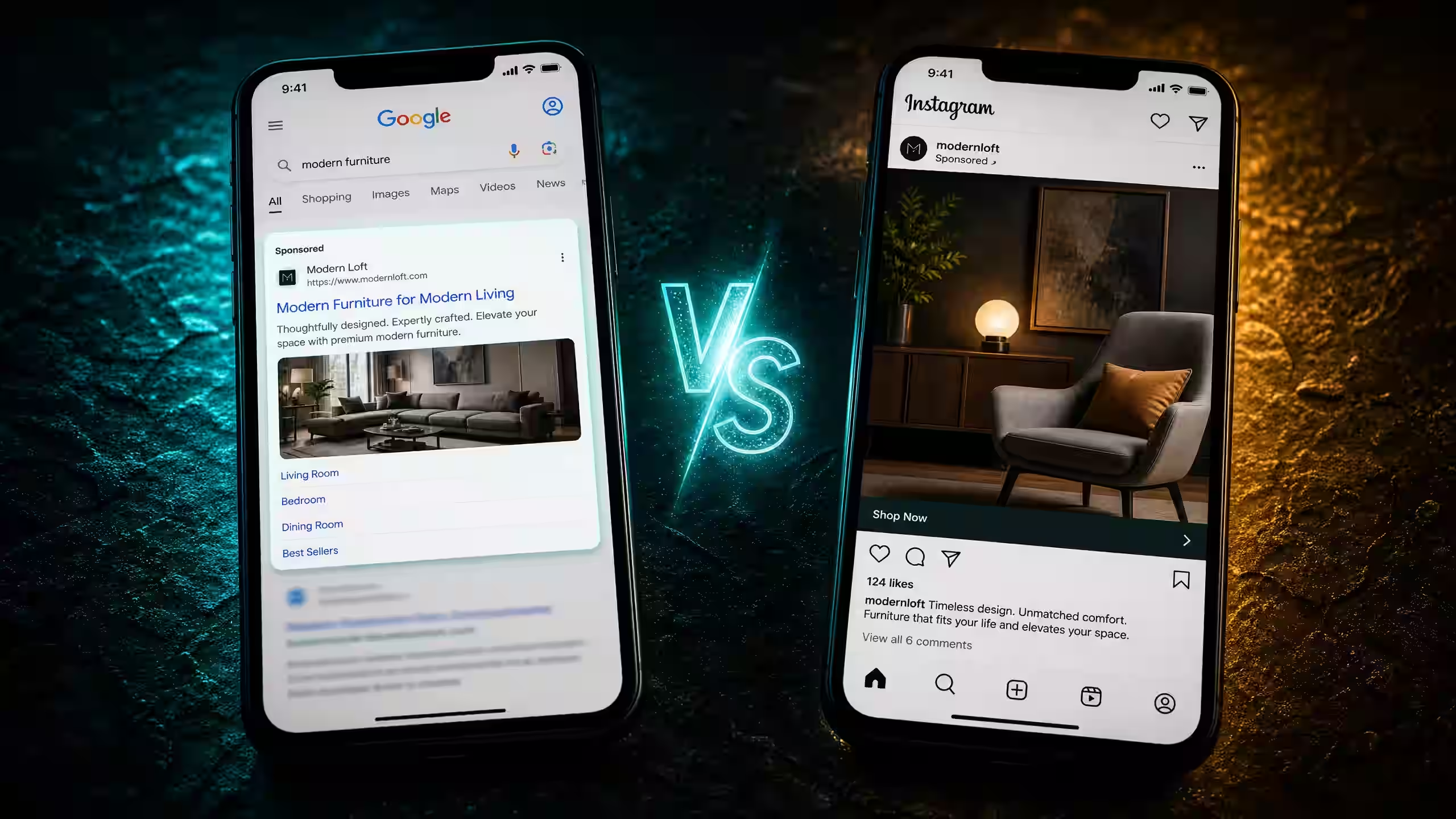
You've got $1,000 to spend on ads this month. Maybe $2,000. And you're staring at two platforms wondering which one will actually bring in customers.
Google Ads or Meta Ads?
I get asked this question constantly. Restaurant owners, gym managers, dentists, B2B founders. Everyone wants a straight answer. And the truth is, it depends on your business. But not in the vague, hand-wavy way most people say that. It depends on very specific things that I can break down for you right now.
Here's the short version: Google Ads catches people who are already looking for you. Meta Ads puts you in front of people who don't know you exist yet. Both work. But they work for very different reasons, at very different moments, for very different types of businesses.
Let me explain.
The Fundamental Difference: Intent vs. Attention
Google Ads is an intent platform. Someone types "best dentist near me" or "plumber in Dallas" or "gym membership deals." They're actively searching. They have a problem. They want a solution right now. Your ad shows up at the exact moment they need you. That's powerful.
Meta Ads (Facebook and Instagram) is an attention platform. Nobody opens Instagram thinking "I need to find a dentist." They're scrolling through Reels, looking at what their friends are eating, watching workout videos. Your ad interrupts that scroll. It says, "Hey, you didn't know you needed this, but look."
One catches demand. The other creates it.
This distinction matters because it changes everything. Your ad copy. Your landing page. Your budget. Your expectations. A Google Ads campaign and a Meta Ads campaign need completely different approaches, and most businesses treat them the same. That's why they waste money.
When Google Ads Wins
Google Ads dominates when people are actively searching for what you sell. If your business solves a problem that people Google, this is your platform.
High-Intent Searches
Someone searching "emergency plumber near me" at 11 PM isn't browsing. They're buying. Same for "personal injury lawyer," "same-day dental crown," or "commercial cleaning services." These are ready-to-buy searches. And Google Ads puts you at the top of the results page before they even see the organic listings.
Optimised Google Ads campaigns see ROIs of 350% to 400%. That's $3.50 to $4 back for every dollar you spend. But only when you're targeting the right keywords and sending people to the right page.
Service Businesses
If you're a plumber, electrician, HVAC company, lawyer, accountant, or consultant, Google Ads is probably where your first dollar should go. People search for these services when they need them. They don't discover their accountant on Instagram.
B2B services especially benefit here. When a business owner searches "payroll management company" or "IT support for small business," they're comparing options and ready to talk. A well-placed search ad with a strong landing page can turn that click into a qualified lead the same day.
Local Searches
46% of all Google searches have local intent. That's nearly half. "Restaurants near me." "Gym in downtown Austin." "Dermatologist accepting new patients." If you serve a specific geographic area, Google Ads combined with a strong Google Business Profile is the most direct path to customers.
And here's something most people miss. The Google Local Pack captures over 30% of clicks on local search results. So when you combine paid search ads with a well-optimised GBP listing, you're showing up twice on the same results page. That kind of visibility is hard to beat.
People Ready to Buy
Google Ads works best when the buying cycle is short. Someone searches. They click. They call, book, or buy. Done. For businesses where the decision happens fast, Google is the clear winner.
Think about it. A person searching "book dental cleaning today" isn't going to think about it for two weeks. They want to book now. Your ad, your landing page, your phone number. That's all you need.
When Meta Ads Wins
Meta Ads shine when people don't know they need you yet. Or when your product is visual, emotional, or impulse-driven. This is the platform that creates desire.
Brand Awareness
You just opened a new gym. Nobody knows you exist. Nobody's searching for your gym by name because they've never heard of it. Google Ads won't help you here because there's no search volume for a brand nobody knows.
But Meta Ads? You can target every 25-to-40-year-old within 10 miles of your location who's interested in fitness. You can show them a 15-second video of your facility, your classes, your community. You can get your name in front of 20,000 local people in a week for $500. That's brand building.
Over 40% of gym members discover their facility through social media advertising. And social media ads in fitness lead with a 2.8x average ROI. For gyms and fitness studios, Meta is often the better starting point.
Visual Products and Experiences
Food. Fashion. Travel. Fitness transformations. Home décor. Anything that looks good in a photo or video performs well on Meta. People eat with their eyes first. And Instagram is basically a food discovery platform at this point.
74% of diners use social media to decide where to eat. And 57% of restaurant customers book reservations directly through social platforms. For restaurants, Meta Ads aren't optional. They're the digital version of a window display.
A geo-targeted Instagram ad showing a 10-second clip of your signature dish being plated? That fills tables. A Google Ad for "Italian restaurant near me" also works. But the Instagram ad creates the craving before the person was even hungry.
Retargeting Warm Audiences
This is where Meta really shines. Someone visited your website but didn't book. Someone watched 50% of your video ad. Someone engaged with your Instagram page. You can retarget all of them with a specific follow-up ad.
Retargeting across Meta and Google reduces cost per conversion by up to 30%. That's a significant chunk of money. And Meta's retargeting tools are extremely precise. You can show different ads to people based on exactly what they did on your site.
Most people don't buy on the first visit. They need 3 to 7 touchpoints. Retargeting on Meta provides those touchpoints without you having to wait and hope they come back on their own.
Budget Breakdown: What Should You Actually Spend?
Let's talk real numbers. Not "it depends" followed by silence. Actual starting budgets.
Google Ads Starting Budget
- Local service businesses (plumbers, dentists, cleaners): $500 to $1,000 per month
- Competitive industries (legal, finance, real estate): $2,000 to $5,000+ per month
- B2B services: $1,000 to $3,000 per month
On Google, expect to pay $2 to $15 per click depending on your industry. Legal keywords can hit $50+ per click. Restaurant keywords might be $1 to $3. The cost per lead varies wildly. A dental practice might pay $30 to $75 per new patient lead. A lawyer might pay $150 to $300. But when that lead is worth $3,000 to $50,000 in lifetime revenue, the math works.
Meta Ads Starting Budget
- Local awareness campaigns (restaurants, gyms): $300 to $500 per month
- Lead generation campaigns: $500 to $1,500 per month
- E-commerce and product sales: $1,000 to $3,000+ per month
Meta clicks are cheaper. Expect $0.50 to $3 per click for most local businesses. But cheaper clicks don't always mean cheaper leads. Someone who clicks a Meta ad is usually earlier in the buying process than someone who clicked a Google ad. They might need more nurturing before they convert.
The real metric isn't cost per click. It's cost per lead. And cost per customer. Track those numbers. Everything else is vanity.
Industry Recommendations: Where to Start
I'll make this simple. Based on what we've seen running campaigns across paid ads for multiple industries, here's where to put your first dollar.
Restaurants: Start with Meta
Food is visual. Dining decisions are emotional. And 74% of people use social media to pick where they eat. Run geo-targeted Instagram and Facebook ads within a 5 to 10 mile radius. Show your food. Show your vibe. Include a clear call to action like "Reserve a Table" or "Order Online."
Once you've built some brand awareness, add Google Ads for high-intent searches like "best Thai food in [your city]." But Meta comes first for restaurants. Always.
B2B Services: Start with Google
Nobody scrolls Instagram looking for an accounting firm. But they absolutely Google "fractional CFO services" or "managed IT support." B2B buyers research on Google. They compare on Google. They shortlist on Google.
Start with Google Search Ads targeting your highest-intent keywords. Build a landing page for each service. Track conversions. Then add LinkedIn and Meta retargeting later to stay in front of people who visited your site but didn't reach out.
Gyms and Fitness: Use Both
Gyms need awareness (Meta) and intent capture (Google) at the same time. Someone might see your Instagram ad on Monday, think about it, and search "gyms near me" on Thursday. If you're running both platforms, you catch them at both moments.
Start with $400 to $600 on Meta for awareness and $400 to $600 on Google for search. Fitness video content gets 1,200% more engagement than text or image posts. So invest in good video for your Meta ads. It pays for itself.
Healthcare: Google Is Your Foundation
82% of patients research healthcare providers online before booking. And that research starts on Google. "Dermatologist accepting new patients near me." "Pediatric dentist open Saturday." These are the searches that drive bookings.
Healthcare providers need Google Ads for local searches, a strong Google Business Profile with patient reviews, and a professional website that builds trust on first visit. Meta can work for healthcare. But it's a second step, not a first step. Use it for retargeting and educational content after you've locked down Google.
6 Common Mistakes That Burn Your Ad Budget
I've audited dozens of ad accounts. The same mistakes show up over and over. Here are the ones that cost you the most money.
1. No Conversion Tracking
This is the biggest one. If you don't have conversion tracking set up, you're flying blind. You don't know which ads generate leads. You don't know which keywords work. You're just spending money and hoping something happens.
Install the Google Ads conversion tag. Set up the Meta Pixel. Track phone calls, form submissions, and online bookings. Without this data, you can't optimize. And you're paying Google and Meta to learn nothing.
2. Targeting Too Broad
A restaurant in Houston doesn't need to advertise to all of Texas. A gym in Brooklyn doesn't need to reach all of New York City. Broad targeting wastes money on people who will never walk through your door.
On Google, use location targeting with a reasonable radius. On Meta, layer location with interests and demographics. A local pizza shop targeting everyone within 50 miles is burning cash. Target 5 to 10 miles. Be specific.
3. Giving Up After 2 Weeks
Google Ads needs 2 to 4 weeks of data before its machine learning really kicks in. Meta needs about the same. If you launch a campaign, run it for 10 days, see 3 leads, and decide "ads don't work," you didn't give it a chance.
Commit to 60 to 90 days. That's the minimum for a meaningful test. The first 2 to 3 weeks are the platform learning who to show your ads to. The real results come in month 2 and month 3.
4. Sending Ads to Your Homepage
Your homepage talks about everything. Your services, your team, your story, your locations. It's not focused. When someone clicks an ad for "teeth whitening in Austin," they should land on a page about teeth whitening in Austin. Not your homepage where they have to dig around and figure out if you even offer that service.
Build dedicated landing pages for your ad campaigns. One page per service. One clear call to action per page. Effective UX design can boost conversion rates by up to 400%. A focused landing page is the easiest conversion win you'll ever get.
5. Ignoring Ad Creative on Meta
On Meta, your ad creative is everything. The algorithm can find the right audience. But if your ad looks like a stock photo with generic text, nobody stops scrolling. User-generated content achieves 4x higher click-through rates than polished studio ads. Real photos. Real videos. Real people. That's what stops the scroll.
6. Not Testing Enough
Running one ad and hoping it works is gambling. Not marketing. Test at least 3 to 5 ad variations per campaign. Different headlines. Different images. Different calls to action. Then let the data tell you which one wins. Kill the losers. Scale the winners. Repeat.
Frequently Asked Questions
Should I run Google Ads or Meta Ads first?
Start with Google Ads if people are actively searching for your service (plumbers, dentists, lawyers, B2B). Start with Meta Ads if your product is visual, impulse-driven, or needs brand awareness first (restaurants, gyms, fashion). If your budget allows $1,000+ per month, test both simultaneously and let the data decide within 60 to 90 days.
How much should I budget for Google Ads vs Meta Ads?
Google Ads: start at $500 to $1,000 per month for local businesses, $2,000+ for competitive industries. Meta Ads: start at $300 to $500 per month for local awareness campaigns. On Google, expect $2 to $15 per click depending on your industry. On Meta, expect $0.50 to $3 per click. The real metric is cost per lead, not cost per click.
Can I run both Google Ads and Meta Ads at the same time?
Yes, and that's often the best approach. Google catches high-intent searches while Meta builds awareness and retargets people who visited your site but didn't convert. Retargeting across both platforms reduces cost per conversion by up to 30%. Start with one platform, get it profitable, then add the second.
Why aren't my Google Ads or Meta Ads working?
The most common reasons are no conversion tracking installed, targeting too broad an audience, sending traffic to your homepage instead of a dedicated landing page, and quitting before the algorithm has enough data (usually 2 to 4 weeks). Fix those four things before changing anything else.
What To Do Next
You've got the framework now. You know the difference between intent and attention. You know which platform fits which business. And you know the mistakes that burn budgets. So what's the move?
If you want to run ads yourself, start with one platform. Set up conversion tracking before you spend a single dollar. Build a landing page. Set a 90-day commitment. Track cost per lead, not likes.
If you'd rather have someone handle this for you, here's where to go:
- Our Paid Ads service — We manage Google Ads and Meta Ads campaigns for restaurants, gyms, healthcare, and B2B businesses. Real targeting. Real tracking. Real ROI.
- Book a free strategy call — 30 minutes. We'll look at what you're currently doing, tell you where to start, and map out a plan. No pressure. No sales pitch.
The worst thing you can do is keep spending money without tracking what it's doing. The second worst thing is not spending at all because you're unsure which platform to pick.
Pick one. Track everything. Adjust based on data. That's the whole game.