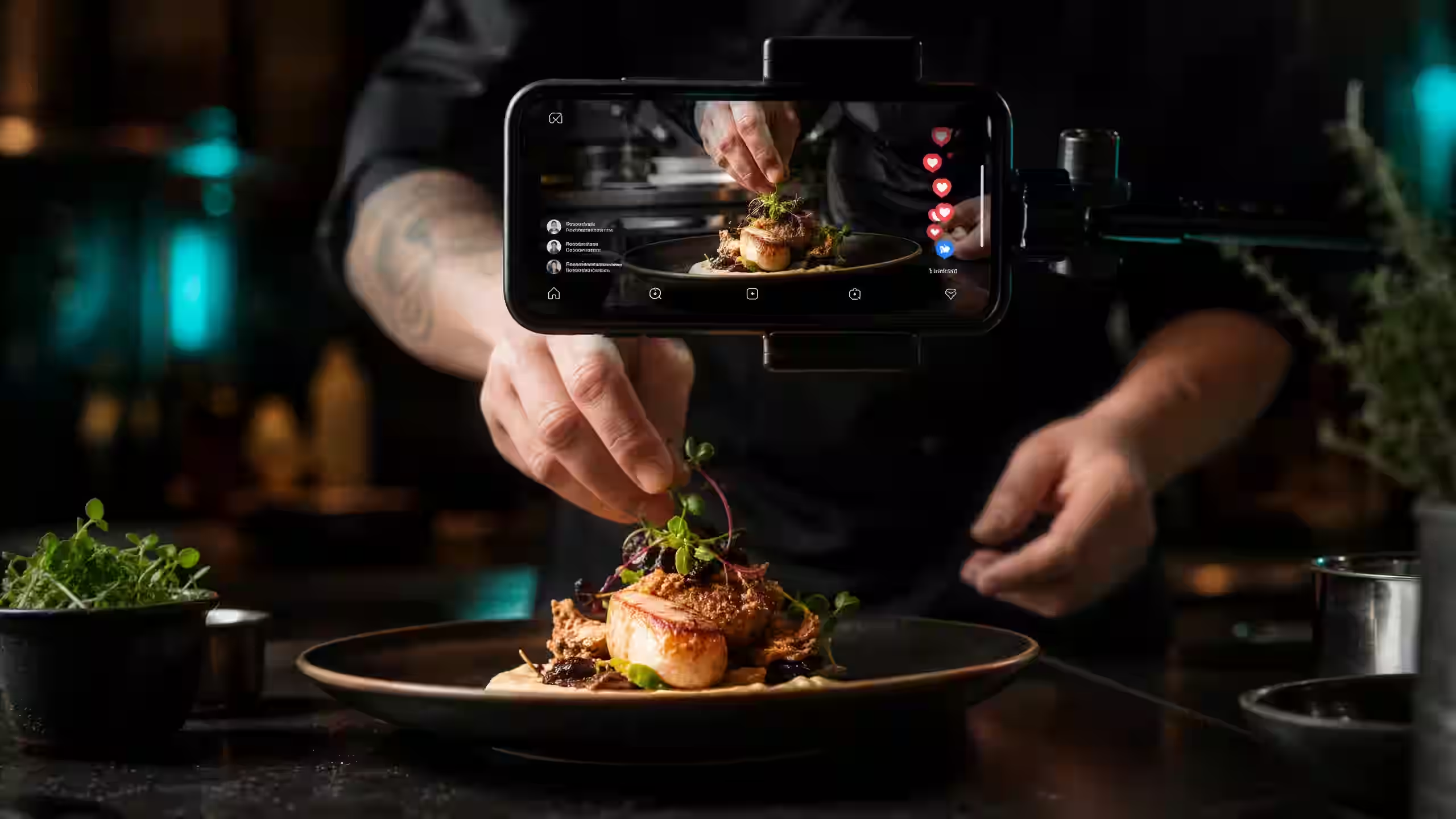
Here's something most restaurant owners get wrong about social media: they think it's about pretty food photos.
It's not.
74% of diners use social media to decide where to eat. That's three out of four people scrolling through their feed right now, deciding between your restaurant and the one down the street. And 57% of them will book a reservation directly through a social platform.
So social media isn't a "nice to have" for restaurants. It's the single biggest driver of new customers you're probably underusing.
We've managed social media for restaurants across the US, UK, and Gulf. These are the 7 strategies that consistently turn followers into people sitting in chairs, ordering food, and coming back next week.
1. Post Behind-the-Scenes Kitchen Content
Your chef flipping a naan on an open flame will outperform a professional photo of the finished dish. Every time.
Why? Because people are bored of polished food photography. Their feed is already full of it. What stops the scroll is something real. A cook seasoning a steak. Dough being stretched by hand. The morning prep before doors open.
Behind-the-scenes content works because it does two things at once. It shows the craft behind your food. And it builds trust. People want to see the kitchen. They want to know the food is fresh, the space is clean, and real humans are cooking it.
You don't need a videographer for this. A phone, decent lighting, and 15 seconds of honest footage. That's it. Post it as an Instagram Story or a TikTok. No script. No fancy editing. The rawer it feels, the better it performs.
One of our restaurant clients started posting 30-second kitchen videos three times a week. Their engagement rate went from 1.2% to 4.8% in the first month. No ad spend. Just real content.
2. Use Instagram Reels and TikTok for Short-Form Video
Video content gets 1,200% more shares than text and image posts combined. Read that number again. 1,200%.
If you're still only posting static food photos to your Instagram grid, you're playing a game that ended two years ago. The algorithm rewards video. Reels and TikToks get pushed to people who don't follow you. That's free reach you can't get from a carousel post.
Here's what works for restaurants on short-form video:
- The "first bite" shot. Close-up of someone cutting into a dish, cheese pulling, sauce dripping. Keep it under 10 seconds.
- Trending audio + your food. Take whatever sound is trending on TikTok this week and pair it with your best-looking dish. Ride the wave.
- Day-in-the-life. Follow your head chef from morning prep to the dinner rush. People love the behind-the-curtain stuff.
- Customer reactions. Film a genuine reaction when someone tries your signature dish for the first time. That's user-generated content gold.
You don't need to go viral. You need to show up. Post 3 to 4 Reels a week, and the algorithm will start doing the work for you.
3. Respond to Every Comment and DM Within 1 Hour
Most restaurants treat their Instagram DMs like an afterthought. Someone asks "What time do you close?" and the reply comes 3 days later. By then, they've eaten somewhere else.
Speed matters. A lot.
When someone comments on your post or sends you a DM, they're interested right now. Not tomorrow. Not next week. Right now. If you respond within an hour, you catch them while they're still hungry. Literally.
And here's the algorithm angle: Instagram and Facebook reward accounts that have active conversations. The more back-and-forth you have in comments and DMs, the more the platform shows your content to other people. Responding fast doesn't just make customers happy. It makes the algorithm happy too.
Set up notifications on your phone. Assign someone on your team to monitor messages during business hours. If you can't do it yourself, that's exactly what a social media management service handles for you.
4. Run Geo-Targeted Meta Ads to People Within 5km
Here's where most restaurant owners waste money on ads: they target too wide.
You don't need to reach everyone in your city. You need to reach the people who can actually walk in tonight. That means geo-targeted Meta Ads focused on a 5km radius around your location.
Facebook and Instagram's ad platform lets you target by exact location, age, interests, and even behaviors like "people who frequently dine out." You can put a photo of your Friday night special in front of 10,000 people within walking distance of your front door for $10 a day.
And the creative doesn't need to be fancy. User-generated content achieves 4x higher click-through rates than polished studio ads. A quick phone video of today's special with a "Reserve your table" button will outperform a $2,000 photoshoot every single time.
Start with $300 to $500 per month. Test 2 to 3 different ads. Kill the ones that don't work. Scale the one that does. That's the whole strategy.
5. Collect and Showcase Google Reviews
88% of consumers trust online reviews as much as a personal recommendation from a friend. Think about that. A stranger's Google review carries the same weight as your best friend saying, "You have to try this place."
Reviews aren't just social proof. They're a ranking factor. Restaurants with 40+ reviews and a 4.0+ average rating show up higher in Google Maps. And the Google Local Pack captures over 30% of clicks on local search results. If you're not in that top 3, you're invisible to most searchers.
Here's how to get more reviews without being annoying about it:
- Ask at the right moment. After a compliment, after a smile, after someone says the food was amazing. That's when you say, "Would you mind leaving us a quick Google review? It really helps."
- Make it stupid easy. Create a short link to your Google review page. Print it on a small card. Put a QR code on the table or the receipt.
- Respond to every review. Good or bad. A thoughtful response to a negative review actually builds more trust than ignoring it. People are watching how you handle criticism.
Then take your best reviews and repurpose them. Screenshot a 5-star review. Post it on Instagram with the reviewer's first name. Turn it into a Story highlight called "What People Say." Let your happy customers do the selling for you.
6. Partner with Local Food Influencers
Not celebrities. Not accounts with 500,000 followers who post about everything from skincare to skydiving. Local food influencers. The person in your city with 3,000 to 15,000 followers who posts about restaurants every day.
These micro-influencers have something big accounts don't: a hyper-local, highly engaged audience. Their followers actually live near your restaurant. And when they recommend a place, people go.
Here's how to do it right:
- Find 3 to 5 local food bloggers in your area. Search hashtags like #[YourCity]Food or #[YourCity]Eats. Look for accounts that consistently get comments, not just likes.
- Invite them for a free meal. No strings attached. Let them order whatever they want. Ask them to share their honest experience. Most will post about it because that's what they do.
- Don't script their content. The whole point is authenticity. If you hand them a script, it'll feel like an ad. Let them shoot their own video, write their own caption, use their own voice.
- Repost their content on your own feed with credit. Now you've got high-quality user-generated content that you didn't have to create.
One micro-influencer visit can generate 5 to 10 pieces of content across their Stories, Reels, and grid posts. That's 5 to 10 touchpoints reaching an audience that trusts them. For the cost of one dinner.
7. Post Consistently: 4 to 5 Times Per Week
Consistency beats virality. Every time.
A restaurant that posts 4 to 5 times per week with decent content will always outperform the one that posts an incredible reel once a month and disappears. The algorithm rewards accounts that show up regularly. Your followers start expecting your content. And potential customers see you as an active, thriving business.
Here's a simple weekly posting schedule that works:
- Monday: Behind-the-scenes prep video
- Tuesday: Customer review or testimonial post
- Wednesday: Menu highlight or new dish reveal
- Friday: Weekend special or event promotion
- Saturday: Reel of the dinner rush, live energy, real atmosphere
That's it. Five posts. None of them need to be perfect. They need to be real, they need to be consistent, and they need to remind people that your restaurant exists and is worth visiting.
If creating 5 posts a week sounds overwhelming, batch your content. Spend one hour every Monday filming 3 to 4 short videos. Schedule them throughout the week. Or hand the whole thing to a team that does this full time.
Real Example: What This Looks Like in Practice
Shaigan Restaurant came to us with a problem most restaurant owners know too well. Great food. Loyal regulars. But zero online presence. Their Instagram had sporadic posts. No Google reviews strategy. No ads. They were invisible to anyone who wasn't already a customer.
Here's what we did:
- Built a content calendar: 5 posts per week mixing behind-the-scenes kitchen content, customer spotlights, and menu highlights
- Started posting Instagram Reels showing their tandoor and open-flame cooking. One reel hit 12,000 views in the first week.
- Set up a Google review collection system with QR codes on tables. They went from 18 reviews to over 85 in 90 days.
- Ran geo-targeted Meta Ads within a 5km radius. Cost per click: $0.28. Cost per reservation inquiry: $3.40.
- Partnered with 4 local food bloggers who created organic content that we repurposed across all channels.
The result? Online engagement tripled. Direction requests on Google Maps went up. And they started getting walk-ins who said, "I saw you on Instagram."
That's not a fluke. It's what happens when you show up consistently with the right strategy. You can see the full case study here.
The One Thing Every Strategy Has in Common
Look, none of these strategies are complicated. Post real content. Respond fast. Run local ads. Get reviews. Partner with people who already have your audience's attention. Show up every week.
The restaurants that struggle on social media aren't failing because the strategies are hard. They're failing because they're inconsistent. They post for two weeks, get busy with the lunch rush, and disappear for a month. Then they wonder why it's not working.
Social media rewards the restaurants that treat it like what it is: the front door of your business. 74% of your future customers will walk through that door before they ever walk through your physical one.
Make sure what they see makes them hungry.
Frequently Asked Questions
What is the best social media platform for restaurants?
Instagram and TikTok deliver the highest engagement for restaurants. 74% of diners use social media to decide where to eat, and short-form video on these platforms gets up to 1,200% more shares than text or image posts. Facebook is still useful for local community reach and event promotion.
How often should a restaurant post on social media?
4 to 5 times per week is the sweet spot. Restaurants that post consistently at this frequency see significantly higher engagement than those posting sporadically. Consistency matters more than going viral once and disappearing for two weeks.
Do Google reviews actually help restaurants get more customers?
Yes. 88% of consumers trust online reviews as much as personal recommendations. Restaurants with 40+ reviews and a 4.0+ average rating rank higher in Google Maps and are 2.7x more likely to be considered reputable by potential customers.
How much should a restaurant spend on social media ads?
Most local restaurants see strong results starting at $300 to $500 per month on geo-targeted Meta Ads. The key is targeting people within a 5km radius and using real food photos or short videos instead of polished studio content. User-generated content achieves 4x higher click-through rates than studio ads.
What To Do Next
You've got two options. Implement these 7 strategies yourself. Or let someone who does this every day handle it for you.
If you want to do it yourself, bookmark this page and start with Strategy 1 this week. Film one behind-the-scenes video. Post it. See what happens.
If you'd rather hand it off, here's where to go:
- Social Media Management — We'll plan, create, and post your content. You focus on the food.
- Restaurant Marketing — Everything we do specifically for restaurants, in one place.
- Book a free strategy call — 30 minutes. We'll audit your current social media and tell you exactly what to fix first.
No pitch. No pressure. Just a straight conversation about what's working and what's not.